Unlock Your Dogs Prospective: A Comprehensive Overview to Efficient Dog Training Strategies
Revealing a dog's potential includes even more than simple obedience. It requires a profound understanding of canine behavior and reliable training strategies. Positive support plays an essential role in cultivating a strong bond and motivating preferred actions. Furthermore, socialization and dealing with behavioral issues are vital parts. As proprietors discover these approaches, they will certainly uncover the nuances that result in a positive and well-adjusted canine friend. The trip to reliable training is just beginning.
Understanding Your Dog's Actions
Understanding a dog's behavior is crucial for reliable training and communication. Pets, as social pets, exhibit different habits that can indicate their emotions and demands. Observing body movement, such as tail position, ear orientation, and posture, uses insights into a dog's mood-- whether they are unwinded, distressed, or hostile. Furthermore, vocalizations like barking, yawping, or growling share different definitions, often showing their mindset. Acknowledging these signals permits owners to react suitably, promoting a stronger bond. Socializing experiences additionally form habits, affecting exactly how canines connect with other pets and people. By thoroughly comprehending these behavioral hints, proprietors can produce an extra harmonious environment, leading to even more successful training outcomes and improved communication with their canine companions.
Positive Reinforcement Training
Advantages of Favorable Reinforcement
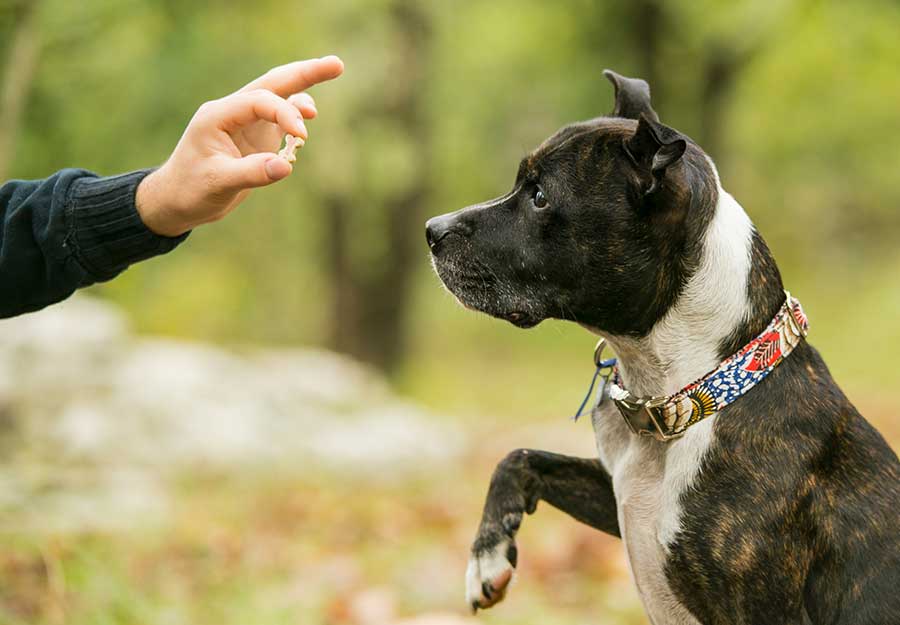
Compassionate training methods have obtained considerable recognition in the field of pet training, especially via making use of favorable support. This approach emphasizes rewarding wanted actions instead of penalizing undesirable ones. The advantages of positive reinforcement are various. To start with, it cultivates a solid bond in between the pet and handler, promoting count on and cooperation. Additionally, dogs trained utilizing this technique are often much more motivated to learn, as they associate training with favorable experiences. In addition, favorable reinforcement can cause resilient behavior adjustments, as it encourages pets to duplicate habits that produce incentives. Finally, this strategy decreases stress and anxiety and anxiousness, producing a more delightful discovering atmosphere. On the whole, the efficiency of favorable reinforcement makes it a preferred selection among pet fitness instructors and proprietors alike.
Strategies for Effective Training
Effective training strategies build on the foundations laid by favorable reinforcement. This method motivates wanted actions through benefits, promoting a positive understanding setting. Techniques such as remote control training and treat-based motivations efficiently interact to canines what activities are valued. Consistency is necessary; commands must be clear and benefits immediate, enhancing the connection between behavior and result. In addition, varying benefits-- making use of deals with, praise, or play-- can preserve a dog's motivation. Integrating short training sessions improves emphasis and retention, while slowly raising problem assists dogs construct self-confidence. Socializing with various other pets and people can also be integrated, allowing for real-world technique of found out behaviors. Ultimately, these techniques create a solid bond between canine and proprietor, assisting in effective interaction and shared understanding.
Standard Commands Every Dog Must Know
A solid foundation of basic commands is essential for each dog, as it cultivates communication in between the pet and the proprietor. Key commands include "sit," "stay," "come," "down," and "leave it." These commands not only develop a framework for obedience but also enhance safety and security during strolls and getaways. Showing "sit" supplies a straightforward method for dogs to reply to demands, while "stay" enhances persistence. The command "come" is essential for ensuring a dog returns when called, reducing the danger of crashes. "Down" urges calmness, and "leave it" aids prevent undesirable habits, such as scavenging. Constant training with favorable reinforcement assurances that dogs recognize and react reliably, ultimately strengthening the bond in between proprietor and pet dog.
Socializing: The Secret to a Well-Adjusted Dog
Socializing functions as a foundation in developing a well-adjusted pet dog, forming habits that advertise consistency in numerous settings. Via exposure to different individuals, animals, and settings, pets discover to establish and navigate social interactions confidence. Early socializing, ideally throughout the critical period in between 3 to 14 weeks old, allows pups to develop positive associations, minimizing the probability of fear and anxiety later on in life. Engaging in puppy classes, monitored playdates, and differed getaways can boost a dog's adaptability and lower sensitivity. Additionally, continuous social experiences throughout a dog's life are important see for keeping their social skills. By prioritizing socializing, proprietors foster a well balanced, friendly companion that thrives in diverse scenarios.
Attending To Behavioral Issues
Several canines encounter behavior issues that can interrupt their partnership with proprietors and hinder their general well-being. Common issues include excessive barking, chewing, and aggressiveness, which commonly originate from concern, anxiousness, or lack of training. Determining the source is essential for efficient intervention. Constant training and positive reinforcement can help modify unfavorable habits. Fulfilling tranquil behavior can lower barking, while giving appropriate chew toys can discourage devastating eating. In addition, creating a structured routine can enhance a dog's complacency, leading to improved behavior. Owners should continue to be person and understanding, as dealing great post to read with these issues may require time and determination. With the best approach, lots of behavioral issues can be efficiently handled, promoting a much healthier bond between pet and proprietor.
Advanced Training Techniques for Enthusiastic Learners
Advanced training strategies can raise the abilities of enthusiastic students and their canine companions. Approaches such as remote control training, dexterity fundamentals, and advanced obedience abilities provide organized methods to boost communication and efficiency (Puppy Training Freeport FL). These methods not just foster a stronger bond in between pet dog and handler but likewise offer psychological stimulation for the dog
Clicker Training Approaches
Remote control training has emerged as a popular and effective approach for canine trainers seeking to boost their canine friends' discovering experience. This positive support strategy utilizes a small handheld gadget that sends out an unique audio, noting preferred actions quickly. By connecting the noise of the clicker with rewards, such as deals with or praise, pet dogs rapidly learn to attach particular actions with positive outcomes.

Fitness instructors can make use of remote control training for numerous commands, tricks, and even addressing behavior concerns. Consistency is essential; each click must be adhered to by a benefit to reinforce the behavior. Professional Dog Training Freeport FL. In addition, this method promotes a bond between the fitness instructor and pet dog, as it urges communication and understanding. With technique, both novice and experienced fitness instructors can effectively carry out clicker training techniques
Agility Training Principles
Building on the principles of favorable support exhibited in remote control training, agility training presents dogs to a collection of challenges developed to examine their rate, coordination, and responsiveness. This vibrant sporting activity consists of various components, such as dives, tunnels, and weave posts, encouraging dogs to browse via programs with accuracy. Handlers play a crucial role, utilizing spoken cues and body movement to direct their pets effectively. Preliminary training concentrates on familiarizing pets with each barrier, ensuring they feel motivated and positive. As pet dogs development, they discover to finish whole courses, improving their fitness and mental acuity. Inevitably, dexterity training not just cultivates a deeper bond in between pet and trainer yet also offers a thrilling outlet for a dog's energy and knowledge.
Advanced Obedience Abilities
While lots of pet dog proprietors begin with fundamental commands, diving right into innovative obedience abilities can significantly improve a dog's training experience and responsiveness. Advanced skills such as off-leash heeling, range commands, and complicated techniques not only challenge the pet dog psychologically yet additionally enhance the bond in between the proprietor and their pet dog. Techniques like clicker training, pen training, and favorable reinforcement are important in this phase. Consistency great site and perseverance are crucial, as canines need time to master these abilities. Moreover, incorporating distractions during training sessions can improve focus and reliability. Involving in advanced obedience not just makes training satisfying however also promotes a positive and well-mannered canine companion, ready to deal with new obstacles with enthusiasm.
Often Asked Inquiries
The length of time Does It Require To Train a Dog Effectively?
Training a dog successfully can take anywhere from a couple of weeks to several months, relying on elements like the dog's age, breed, character, and the consistency of the training methods used by the proprietor.
Can Older Dogs Learn New Techniques?
Yes, older pets can find out brand-new methods. With patience, uniformity, and positive reinforcement, they commonly adapt well to training. Their determination to discover might amaze their owners, proving that age does not restrict finding out possible.
What Should I Do if My Dog Rejects to Pay Attention?
If a dog declines to listen, the owner must continue to be calm and client, reassess the training technique, guarantee distractions are decreased, and consider using favorable reinforcement methods to encourage preferred actions successfully. Freeport Florida Dog Trainer.
How Do I Keep My Dog's Training Gradually?
To maintain a dog's training gradually, regular reinforcement of learned commands, normal session, and positive incentives are crucial. Additionally, including training into everyday regimens maintains abilities fresh and strengthens the bond between owner and pet dog.

Exist Any Kind Of Training Techniques to Prevent?
Specific training techniques must be avoided, such as those making use of physical penalty, scare tactics, or too much pressure. Favorable support strategies are recommended rather, promoting count on and a healthy bond between the pet and its proprietor.
Thoughtful training approaches have actually gotten considerable acknowledgment in the field of canine training, specifically through the use of positive support. In enhancement, canines educated using this technique are frequently more motivated to discover, as they link training with positive experiences. Building on the principles of favorable reinforcement exemplified in clicker training, agility training introduces dogs to a collection of obstacles created to evaluate their speed, coordination, and responsiveness. While many pet dog proprietors begin with basic commands, diving right into advanced obedience abilities can greatly enhance a dog's training experience and responsiveness. To maintain a dog's training over time, regular support of discovered commands, normal technique sessions, and favorable rewards are necessary.